
Implant Supported Dentures in Boynton Beach
July 25, 2026 7:09 amA denture that shifts when you laugh, makes certain foods feel off-limits, or requires adhesive every morning can affect far more than your smile. For people considering implant supported dentures in Boynton Beach, the goal is often simple: eat more comfortably, speak with confidence, and stop planning life around a loose appliance.
Implant-supported dentures can be a meaningful solution for adults missing most or all of their teeth. They combine a custom denture with dental implants placed in the jawbone, creating a more stable foundation than a traditional removable denture alone. The right approach depends on your health, bone structure, goals, budget, and how you want your teeth to feel and function each day.
What Are Implant-Supported Dentures?
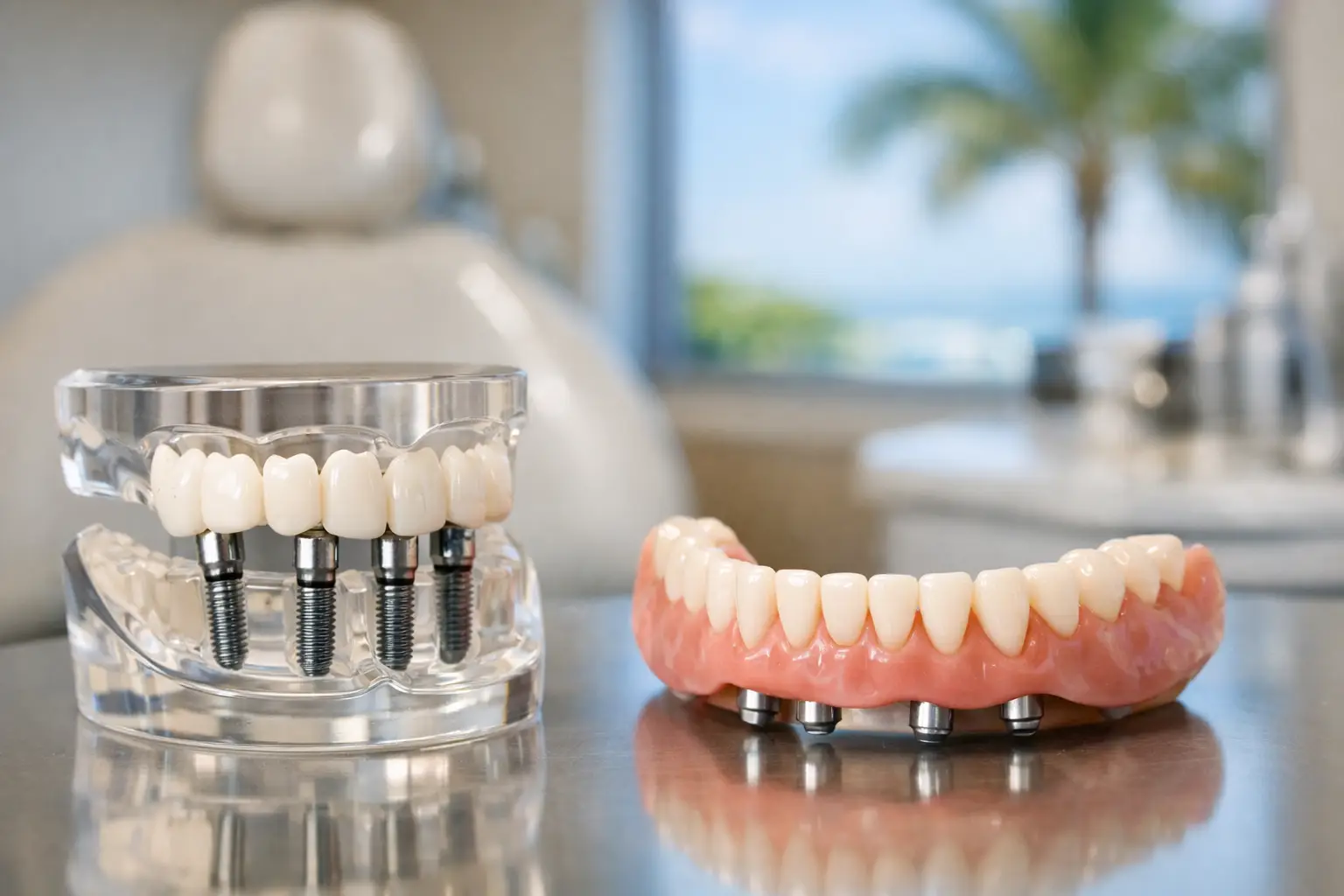
Dental implants are small posts placed in the jawbone to serve as replacement tooth roots. Once they have integrated with the bone, they can support a denture through carefully designed connectors. Rather than resting only on the gums, the denture gains support from the implants.
For many patients, that added stability changes everyday life. A lower denture, in particular, can be difficult to keep steady because the tongue and moving muscles of the mouth are always working against it. Implants can help reduce movement, improve chewing ability, and make speech feel more natural.
Implant-supported dentures are not one-size-fits-all treatment. Some are removable for home cleaning, while others are fixed in place and removed only by the dental team during maintenance visits. Both can be excellent choices. The best option comes down to the level of stability you want, your oral health, and the type of daily care that feels realistic for you.
Removable implant dentures
A removable implant denture, often called an overdenture, snaps or clips onto implants. You take it out at night to clean it and care for the attachments. This option can offer a major improvement in security over a conventional denture while remaining more accessible than some fixed options.
Fixed full-arch teeth
A fixed implant-supported prosthesis stays in place day and night. It is designed to feel more like a set of natural teeth, though it still requires careful brushing and cleaning underneath. Fixed treatment may appeal to patients who do not want to remove their teeth, but it can involve more implants, more detailed planning, and a greater financial investment.
Why Stability Matters Beyond Convenience
Loose dentures can create sore spots when they rub against the gums. They may also limit food choices, especially foods that require a stronger bite, such as crisp vegetables, grilled meats, or apples. Adhesives can help in some cases, but they do not address every fit or stability concern.
Implants help distribute biting forces more effectively, which may make chewing more comfortable and efficient. They can also help preserve the jawbone. After teeth are lost, the body gradually resorbs bone in the area where tooth roots once stimulated it. A denture replaces visible teeth, but it does not replace those roots. Implants provide stimulation within the jawbone, which can help slow further loss.
That does not mean implants stop all natural changes forever, or that every patient will have the same result. Bone health, bite forces, hygiene, medical history, and routine dental care all play a role. Honest treatment planning means discussing both the benefits and the responsibilities before moving forward.
Who May Be a Good Candidate?
Many adults who wear dentures, have failing teeth, or are facing multiple extractions may be candidates for implant-supported dentures. Age alone is not usually the deciding factor. A healthy, active person in their seventies may be an excellent candidate, while a younger patient may need to address gum disease or other health concerns first.
Your dentist will look at the quality and amount of available jawbone, the health of your gums, your bite, and your overall medical history. Imaging helps determine where implants can be placed safely and predictably. If bone volume is limited, bone grafting or another treatment approach may be recommended. In other cases, existing bone can support implants without grafting.
Smoking, uncontrolled diabetes, untreated periodontal disease, and certain medications can affect healing. These factors do not automatically rule out treatment, but they deserve a straightforward conversation. A thoughtful dental team should never make promises before completing an exam and reviewing the details that make your situation unique.
The Process for Implant Supported Dentures in Boynton Beach
The process begins with a consultation focused on your concerns. Some patients are tired of a denture that moves. Others have teeth that are painful, loose, or difficult to restore. Some simply want to understand their options before their current situation becomes urgent.
At Schmidt Family Dental, treatment planning begins by listening. Your appointment should include time to discuss what you hope to change, what makes you nervous, and what daily life with your new teeth should look like. Modern imaging and a detailed exam allow the dentist to evaluate your jaw, bite, remaining teeth, and bone support before recommending a path forward.
If extractions are needed, they may be completed before or at the time of implant placement, depending on your clinical needs. After implants are placed, the body needs time to heal and allow the implants to integrate with the bone. During this period, you may wear a temporary denture or provisional teeth so you are not left without a smile.
Once healing is complete, precise impressions or digital scans are used to create your final denture. The final appliance is designed for your facial appearance, bite, speech, and comfort. A few adjustment visits are normal. Creating natural-looking, comfortable teeth is a process, and small refinements matter.
What Recovery Is Really Like
It is understandable to feel anxious about implant treatment. Most patients are relieved to learn that discomfort is typically manageable with instructions, prescribed or over-the-counter medication when appropriate, and a soft-food diet during early healing. Swelling and tenderness can occur, especially when extractions are involved, but they should improve as healing progresses.
The timeline varies. A straightforward case may move more quickly than a case requiring extractions, grafting, or treatment for active gum disease. Trying to rush healing can compromise the result, so the better question is not always, “How fast can this be done?” It is, “What is the safest plan for a comfortable, lasting outcome?”
If dental anxiety has kept you from seeking care, say so at the beginning. You deserve clear explanations, opportunities to ask questions, and a pace that helps you feel informed rather than pressured.
Caring for Your New Smile
Implants cannot develop cavities, but the tissues around them still need daily care. Plaque and inflammation around implants can lead to problems if they are not addressed early. Consistent home care and regular professional visits protect your investment.
For a removable overdenture, this means removing and cleaning the denture daily, gently cleaning around the implants, and following instructions for the attachment components. For fixed teeth, you may use special brushes, flossing tools, or a water flosser to clean beneath the prosthesis. Your dental team can show you what works for your specific design rather than leaving you to figure it out alone.
Dentures, attachments, and prosthetic teeth can wear over time, even when implants remain healthy. Periodic maintenance is part of long-term success, not a sign that treatment has failed.
Questions Worth Asking Before You Decide
A good implant consultation should leave you with clear answers, not more uncertainty. Ask whether your recommended teeth will be removable or fixed, how many implants are planned, whether grafting may be needed, and what temporary teeth will look like during healing. It is also reasonable to ask about expected maintenance, payment options, and the full scope of treatment costs.
Be cautious of treatment presented as identical for every patient. A plan that works beautifully for a friend or family member may not be the best plan for your bone structure, health history, or preferred level of care. The strongest recommendation is one that explains why it fits you.
A stable smile can make meals, conversations, family photos, and ordinary errands feel easier again. If you are ready to talk through your options without pressure, schedule a consultation and bring your questions. The next step should feel personal, clear, and built around the life you want to get back to.
Categorised in: Uncategorized
