
Are Dental Implants Right for Your Smile?
July 24, 2026 7:12 amA missing tooth can change more than the way a smile looks. It can make it harder to enjoy a favorite meal, speak without self-consciousness, or feel fully at ease in photos. Dental implants are designed to replace the entire missing tooth structure, helping many patients regain comfort, function, and confidence with a solution that feels much closer to a natural tooth.
For some people, replacing a missing tooth is a decision they have been putting off for years. Others are facing an extraction and want to understand their options before moving forward. Either way, the right treatment should never feel rushed or one-size-fits-all. Your oral health, goals, comfort needs, timeline, and budget all matter.
What Are Dental Implants?
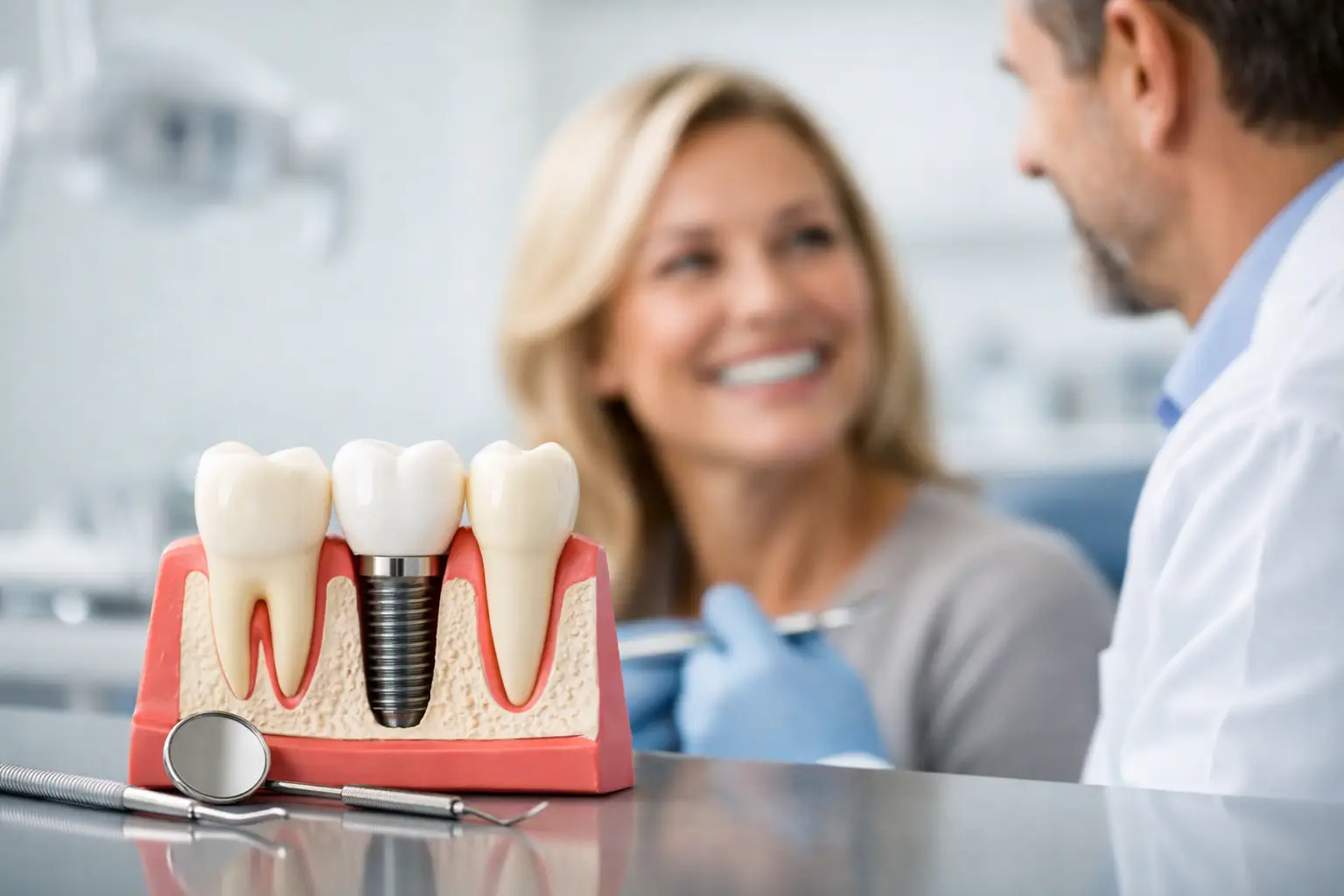
A dental implant is a small post, typically made from biocompatible titanium, that is placed in the jawbone where a tooth root once was. As the area heals, the bone can integrate with the implant, creating a stable foundation for a custom crown, bridge, or denture.
The visible restoration is made to blend with your smile, while the implant below the gumline provides support where it matters most. Unlike a removable partial denture, an implant-supported crown is fixed in place. Unlike a traditional bridge, it may allow a missing tooth to be replaced without reshaping the healthy teeth beside it.
That does not mean implants are automatically the best choice for every situation. A bridge or removable appliance may be more appropriate depending on your health, the number and location of missing teeth, bone support, treatment timeline, and personal preferences. Honest guidance starts with looking at the whole picture.
Why Replacing a Missing Tooth Matters
It is easy to think of one missing tooth as a cosmetic concern, especially if it is near the back of the mouth. Yet teeth work together. When a space is left open, nearby teeth can gradually shift. Your bite may change, chewing can become less balanced, and the opposing tooth may begin to move into the empty space.
The jawbone also relies on the stimulation created by tooth roots. After tooth loss, bone in that area can gradually shrink over time. An implant can help provide that stimulation, which is one reason it is often considered a long-term option for tooth replacement.
Just as importantly, a complete smile can make daily life feel simpler. Patients often want to eat more comfortably, avoid removing an appliance at night, or stop worrying that a gap is the first thing someone notices. These are personal goals, and they deserve a personal conversation.
Who May Be a Candidate for Dental Implants?
Many adults with one or more missing teeth may be candidates, including people who have worn a bridge or denture for years. Good candidates generally have healthy gums, enough bone to support an implant, and a commitment to daily oral hygiene and regular dental visits.
A consultation is essential because candidacy is not determined by age alone or by a quick look at a smile. Digital imaging and a detailed exam help assess bone levels, gum health, bite alignment, and the condition of surrounding teeth. If bone volume is limited, grafting may be recommended before implant placement. That can add time to treatment, but it may create a more secure foundation.
Certain health conditions, medications, smoking habits, and untreated gum disease can affect healing. None of these automatically rule out treatment, but they should be discussed openly. Clear answers are better than promises, especially when planning a restoration intended to serve you for many years.
If a Tooth Needs to Be Extracted
When a tooth cannot be saved, it is helpful to discuss replacement options before the extraction whenever possible. In some cases, an implant can be placed at the same time as extraction. In others, the site needs time to heal first. The best timing depends on infection, bone quality, gum tissue, and the stability needed for a successful result.
The Dental Implant Process, Step by Step
Implant treatment happens in stages because the goal is not simply to place a post. The goal is to create a healthy, comfortable, natural-looking result that works well with your bite.
Your first visit focuses on planning. Your dentist will listen to what has been difficult, examine the area, review imaging, and explain the options in plain language. You should understand what treatment involves, how long it may take, and what alternatives are available before making a decision.
During implant placement, the post is carefully positioned in the jawbone. Local anesthetic is used to keep you comfortable, and your care team can discuss options if anxiety has made dental treatment difficult in the past. Many patients are surprised to find that the experience is more manageable than they expected.
Next comes healing. The implant and bone need time to integrate, often over several months. A temporary tooth may be appropriate in some situations, particularly when a front tooth is being replaced. Once healing is complete and the implant is stable, a custom crown, bridge, or denture is attached.
The final restoration is not an afterthought. Its shape, color, bite, and contour all affect how it looks and feels. Careful planning helps the new tooth complement your facial features and neighboring teeth rather than stand out as something artificial.
Single Implants, Bridges, and Implant-Supported Dentures
Dental implants can support different kinds of restorations. One missing tooth may be replaced with a single implant and crown. Several missing teeth in a row may sometimes be replaced with an implant-supported bridge, reducing the need for an implant at every individual space.
For patients missing most or all of their teeth, implant-supported dentures can offer a significant improvement in stability. Depending on the design, the denture may snap into place for removal or be fixed in place by the dentist. The right choice depends on bone availability, home-care needs, dexterity, budget, and how much stability a patient wants.
A traditional denture remains a valuable option for some patients. It is usually less involved upfront and may be the right fit when health, anatomy, or finances make implants less practical. The best plan is the one that supports your health and daily life without pressure.
Caring for an Implant-Supported Smile
Implants cannot get cavities, but the tissues around them still need consistent care. Plaque can build up around an implant crown and irritate the gums, potentially leading to inflammation or bone loss around the implant. Brushing twice a day, cleaning between teeth, and keeping regular professional cleanings are essential.
Your dentist may recommend specific floss, brushes, or water-cleaning tools based on the type of restoration you have. If you clench or grind your teeth, a custom nightguard may help protect both the implant restoration and your natural teeth from excessive force.
An implant restoration is built for everyday life, not neglect. Routine visits allow your dental team to monitor gum health, bite pressure, and the condition of the crown or denture so small concerns can be addressed early.
Questions to Ask Before You Decide
A thoughtful consultation should leave room for questions. Ask what is causing the tooth loss, whether surrounding teeth and gums are healthy, what the expected timeline looks like, and which parts of treatment may be handled at different appointments. It is also reasonable to ask about costs, financing options, and the expected maintenance of each replacement option.
Pay attention to how the answers make you feel. You deserve to understand the recommendation without being talked over or pushed into treatment. At Schmidt Family Dental, we believe dental care should be as personal as your smile, with time to discuss what will help you feel comfortable and confident moving forward.
If a missing tooth has been affecting how you eat, speak, or smile, you do not have to decide everything at once. Start with a conversation and a complete evaluation. A well-planned next step can bring real relief and help you feel at home in your smile again.
Categorised in: Uncategorized
